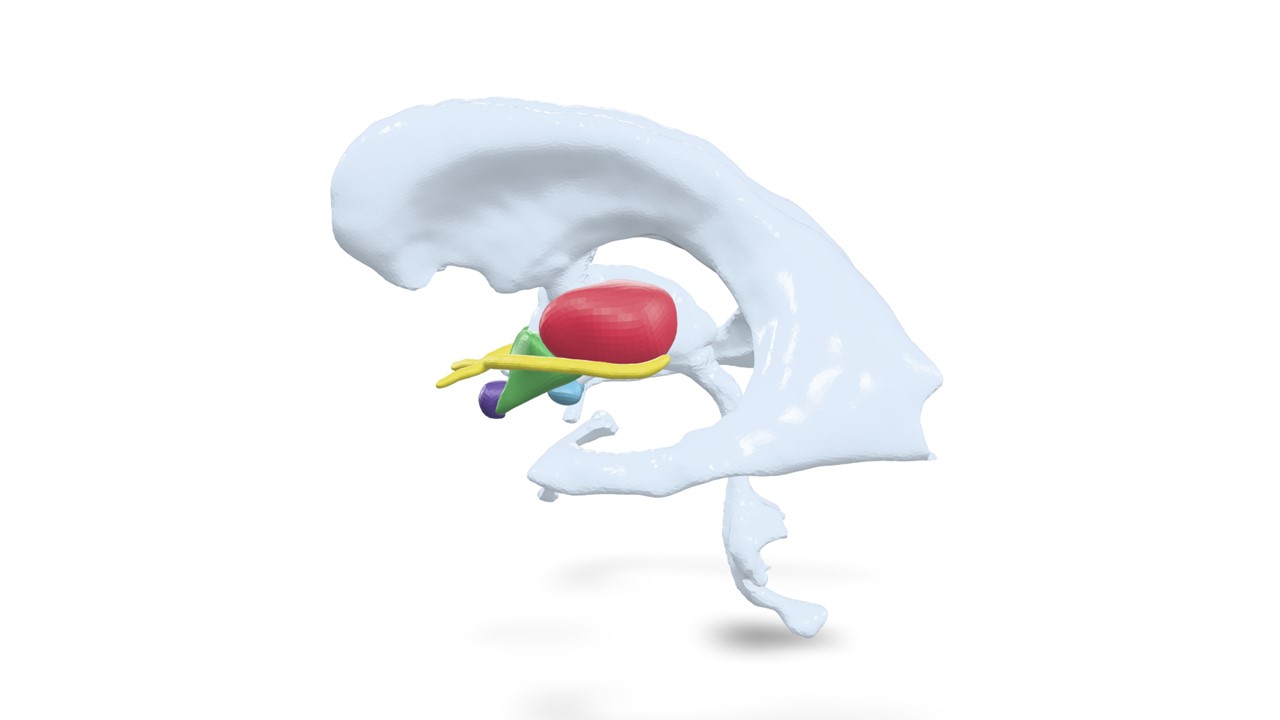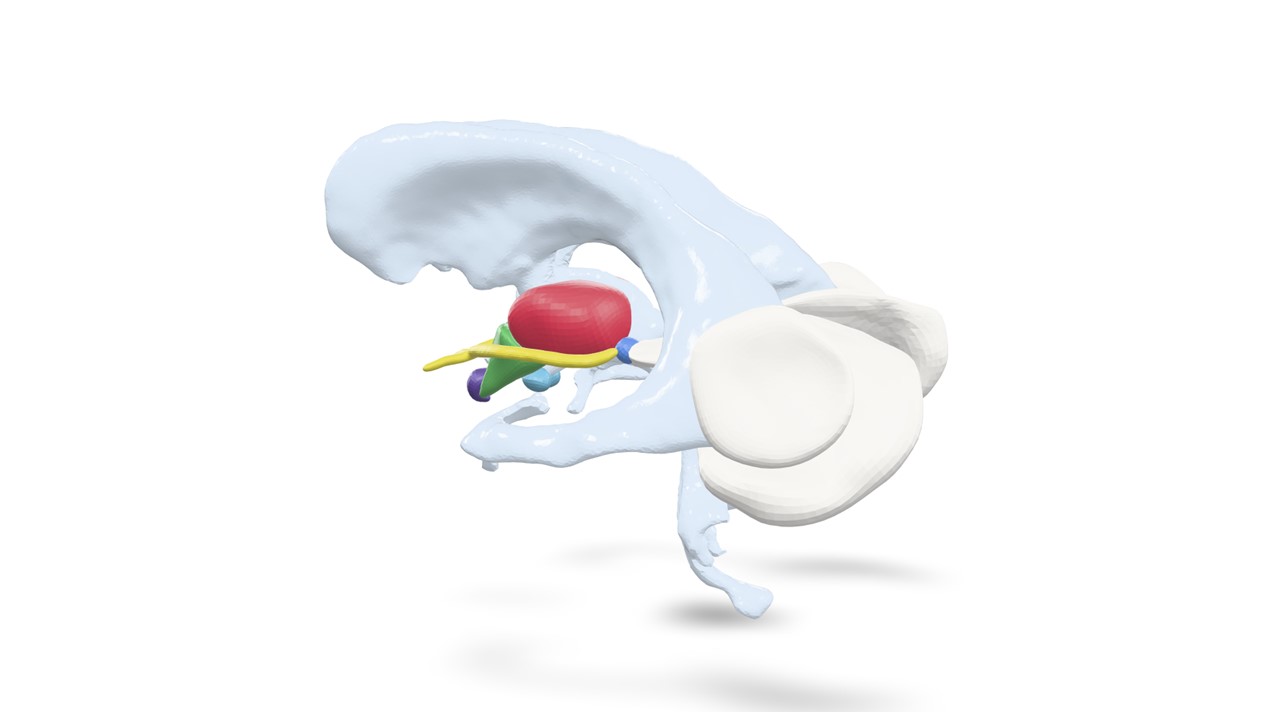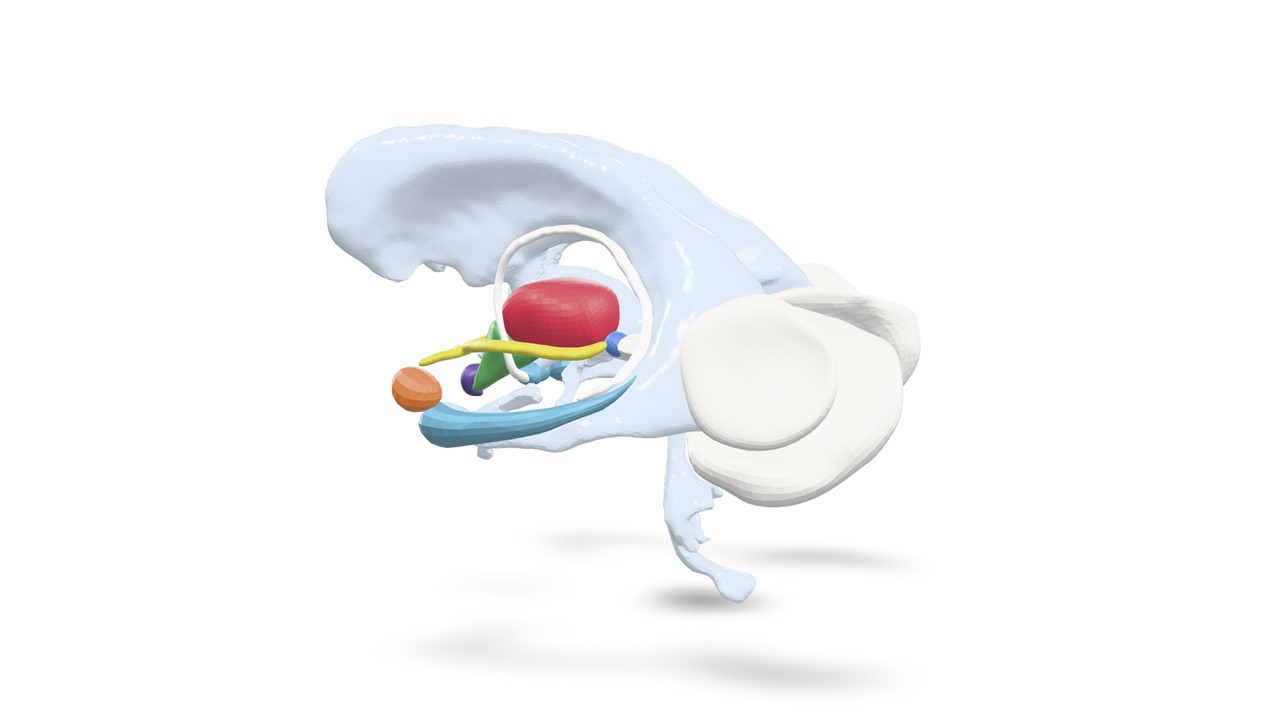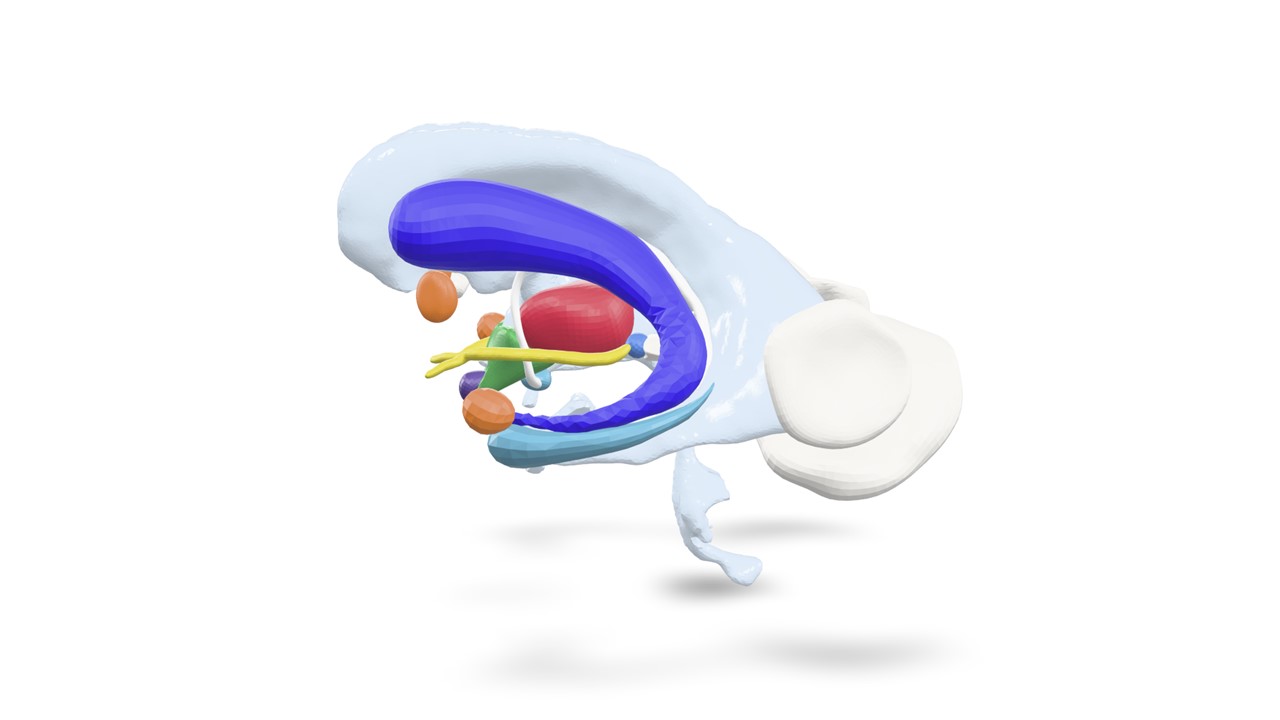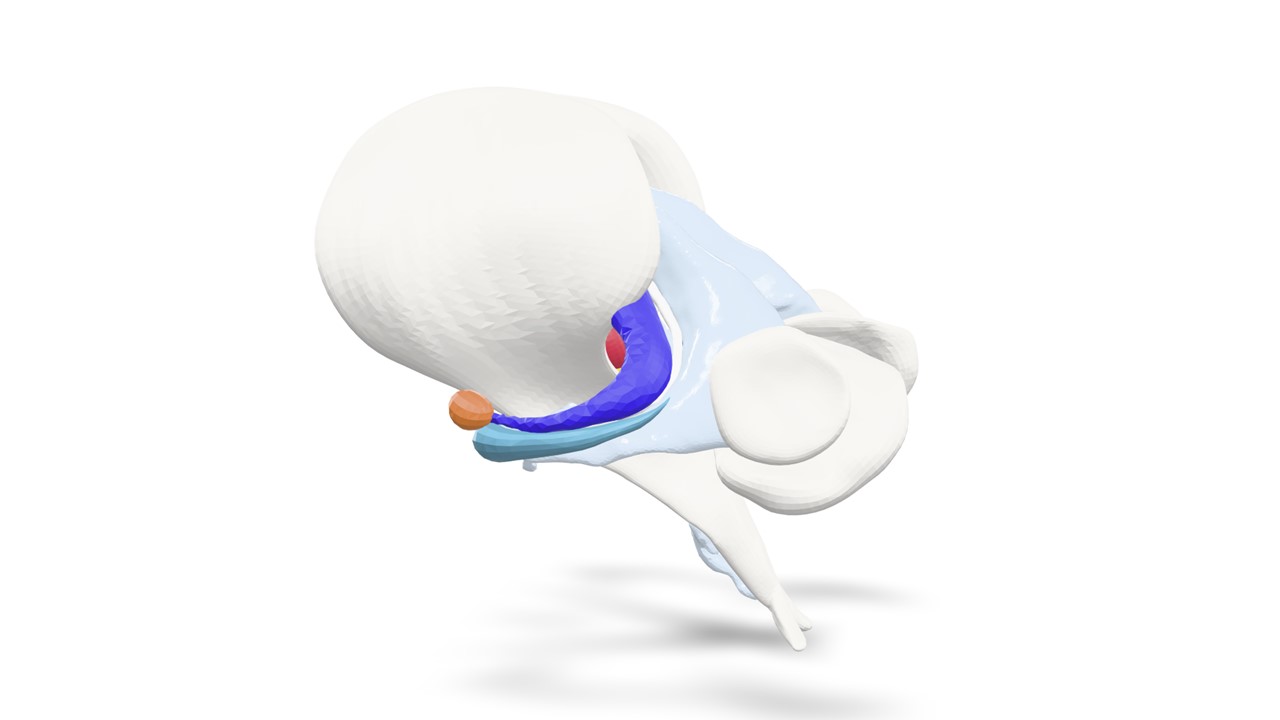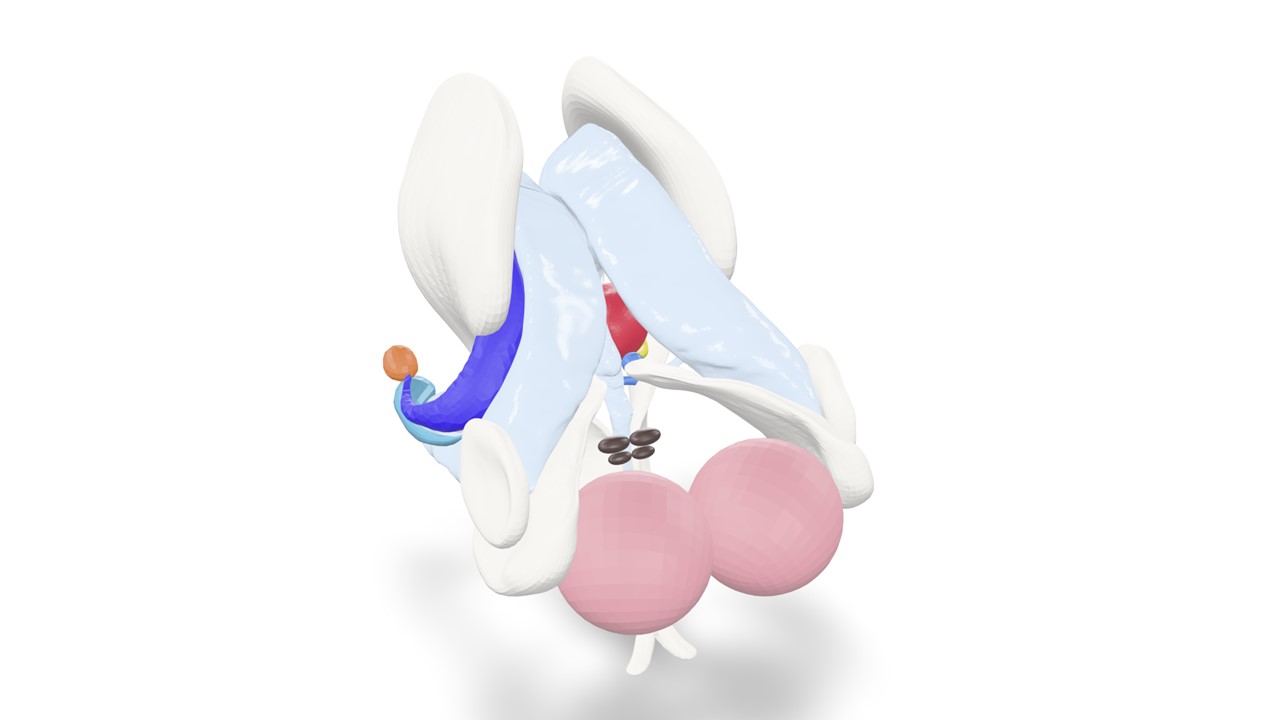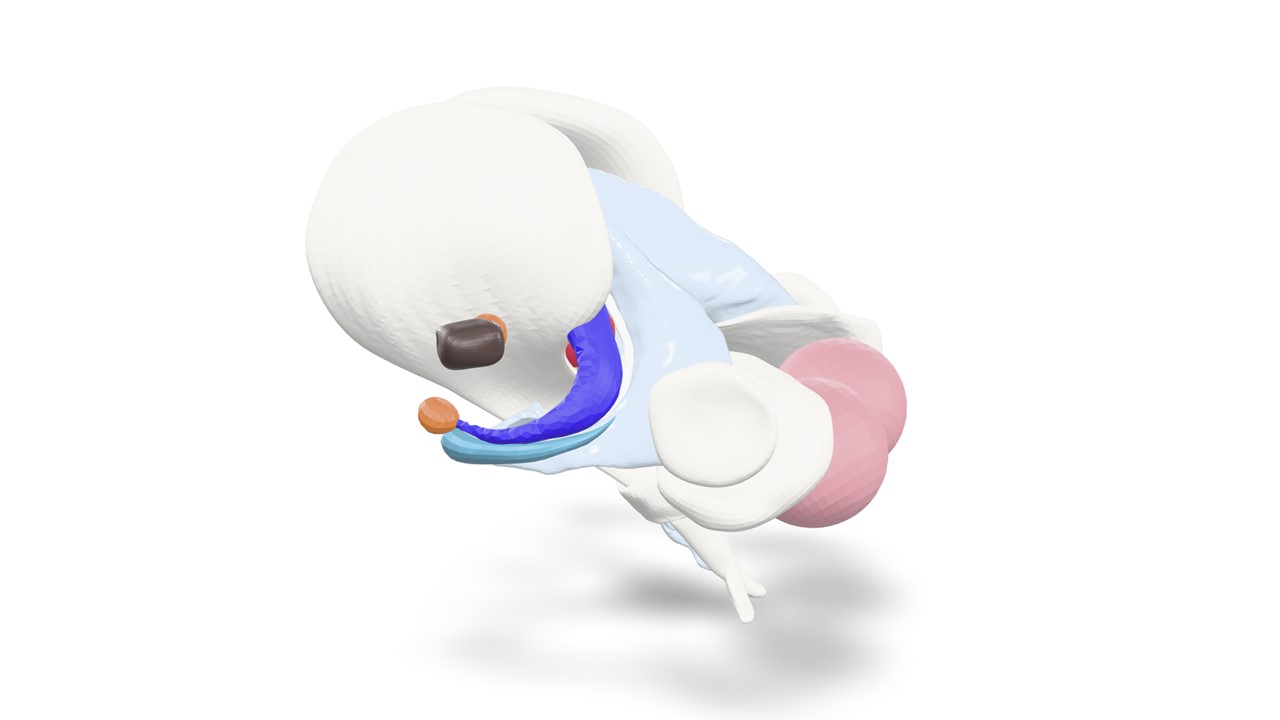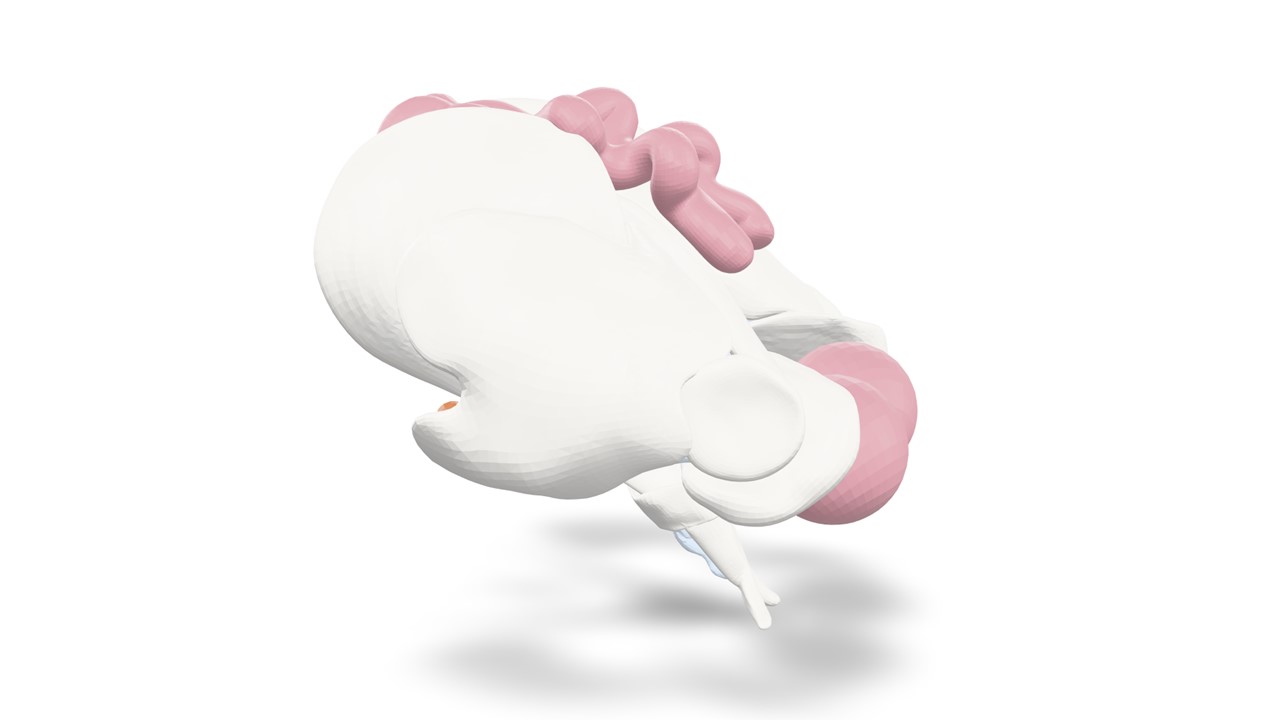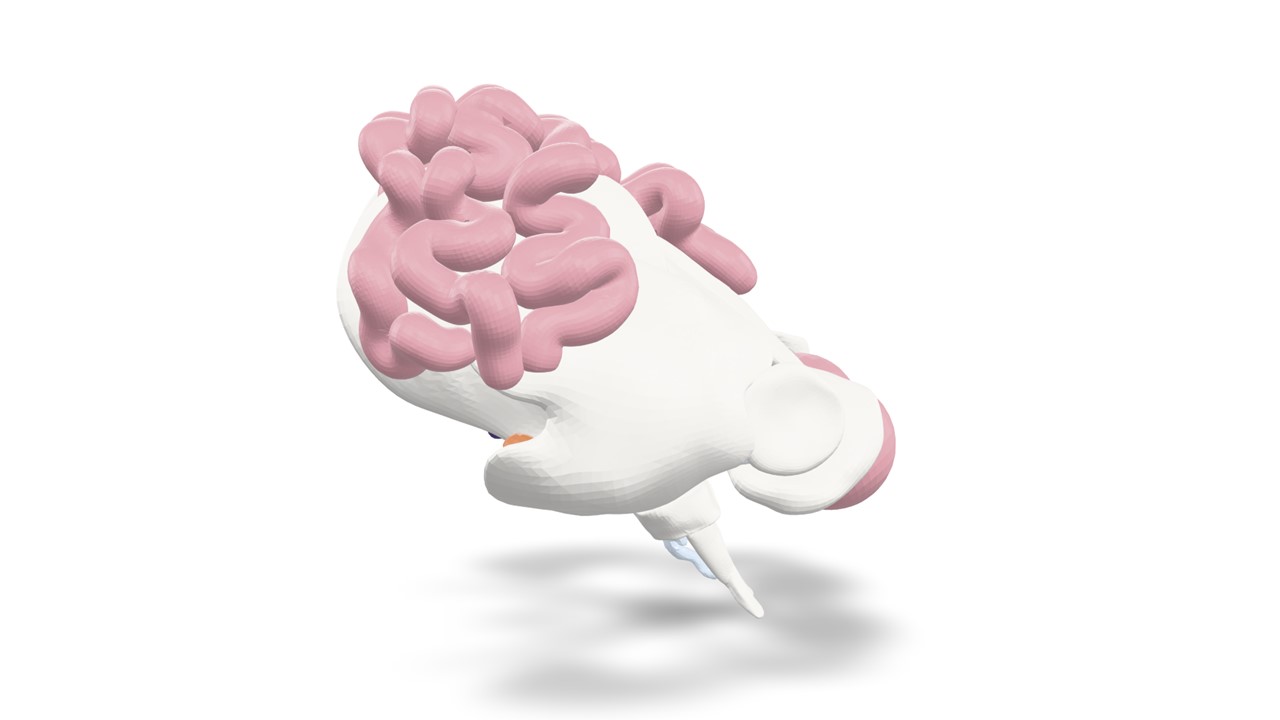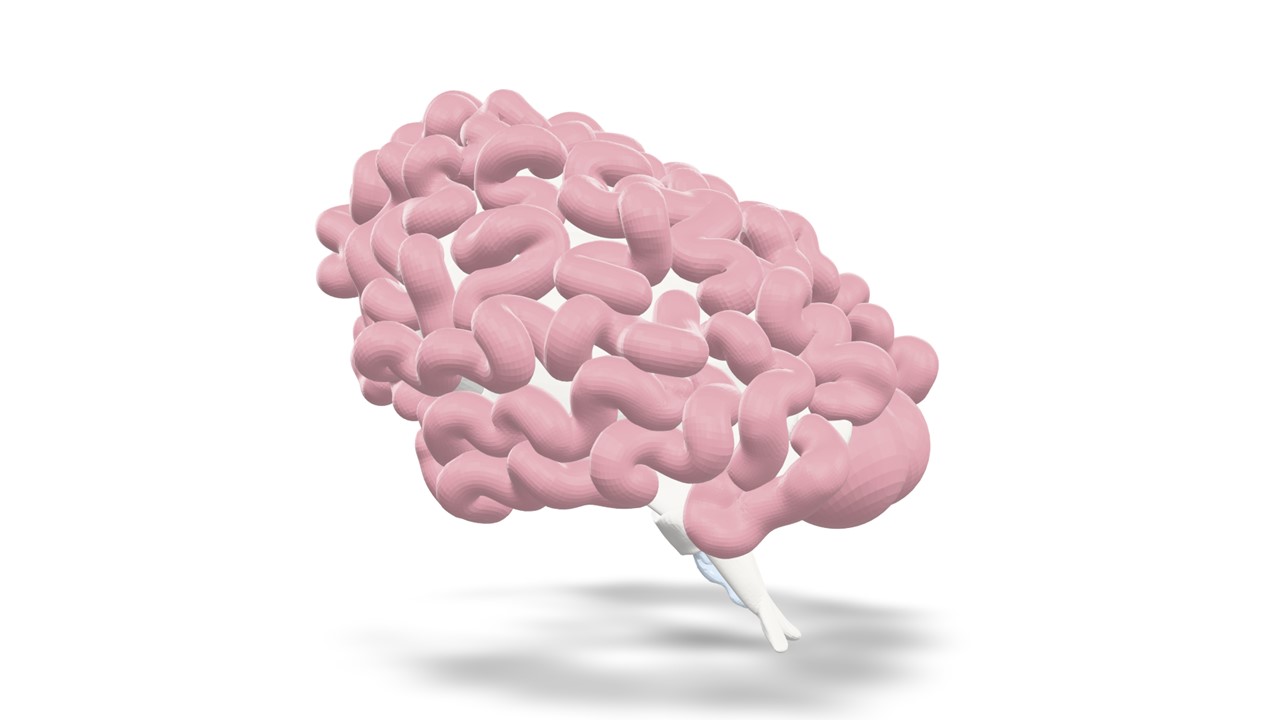
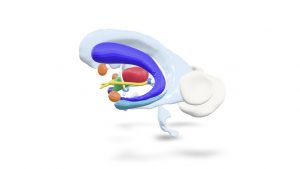
Step 4. In the reward circuit, three structures form an important axis: the caudate nucleus, the nucleus accumbens and the anterior commissure. They connect the frontal lobe to the limbic system (e.g. hippocampus and amygdala), regulating motivation and thus how one engages in certain behaviours and motor movement.
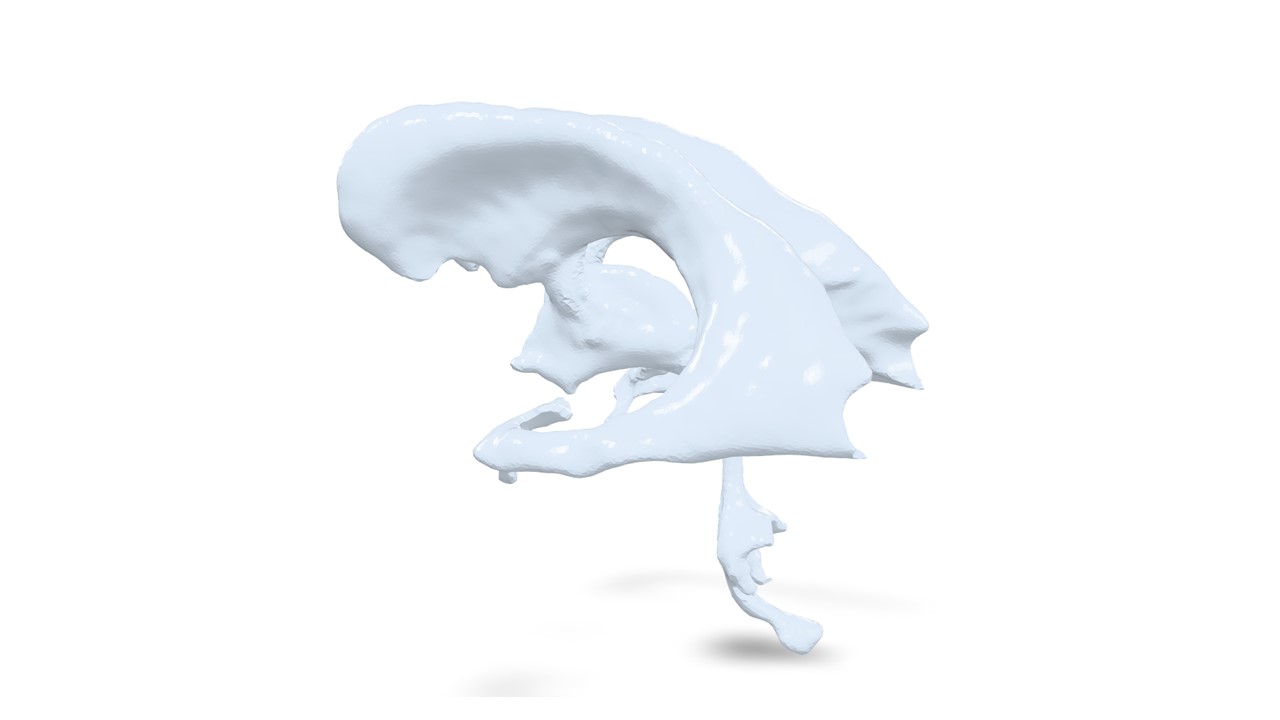
- Caudate Nucleus (blue): Sculpt two longer rolls with a thicker frontal side and a thin end, resembling a head with a thin tail. Place these rolls on both sides laterally to the lateral ventricles, with the thin end extending into the amygdala.
- Anterior Commissure (white): Sculpt a thin tube and place it frontally between both caudate nuclei.
- Nucleus Accumbens (orange): Model two oval spheres and place them frontally on the anterior commissure.
00 Ventricular system
01 Thalamus, Hypothalamus, Pituitary Gland, Optic Chiasm, Mammillary Bodies
02 Optic Radiation
03 Limbic System
04 Reward System
05 Corticospinal Tracts
06 Cerebellum
07 Basal Ganglia
08 Connections: Corpus Callosum, Cingulate Gyrus, and White Matter Networks
09 Structure of the Cerebrum, Starting with Three Important Gyri
10 Structure of the Cerebrum, Frontal, Parietal, and Occipital Lobes